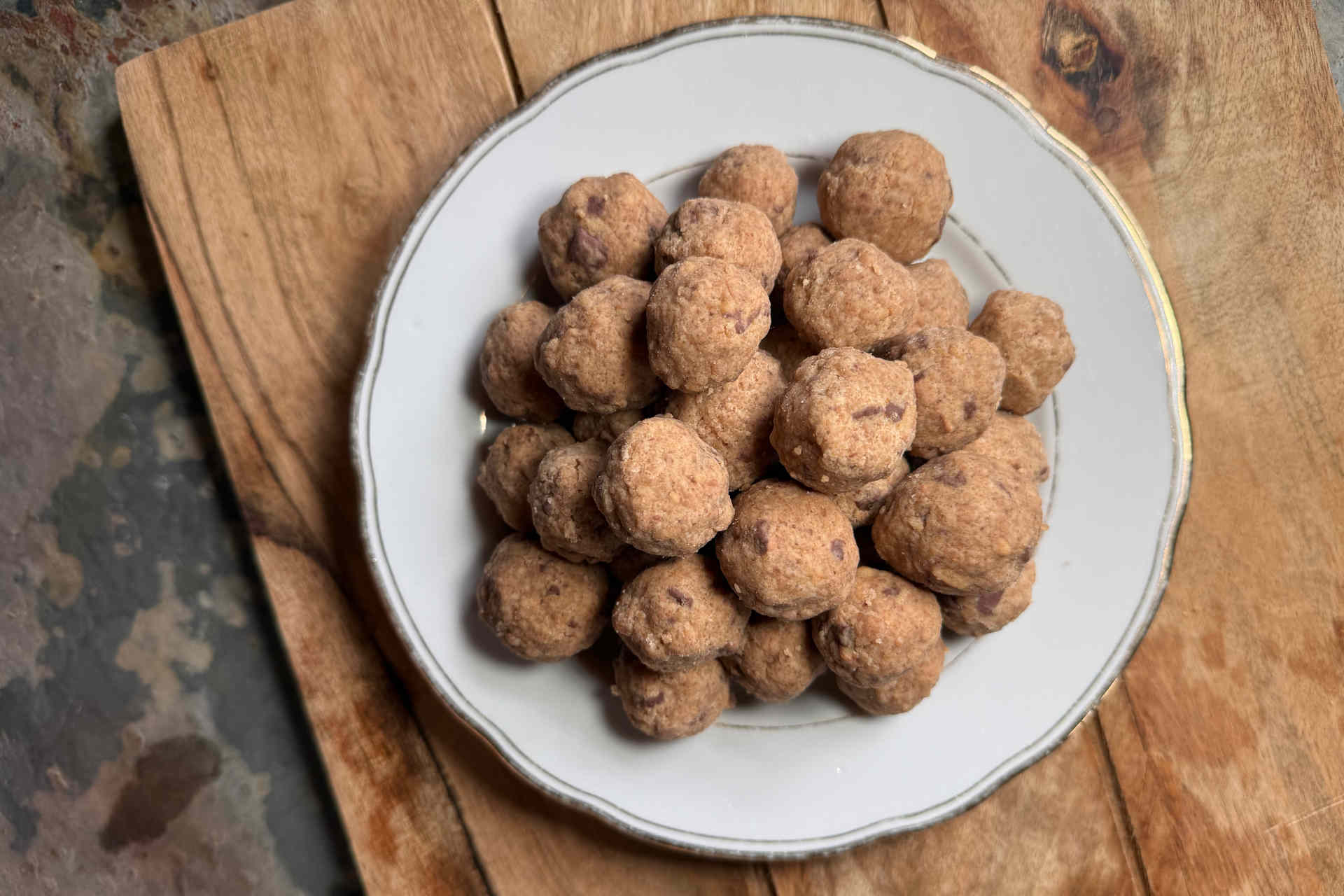
Cookie dough bites Photo: Alexandra Gorsche
How to Make Homemade Cookie Dough
The best recipe for edible cookie dough bites: perfect for ice cream, desserts & freezing
Small bites, big impact: Why you should always have cookie dough on hand
It's often the little things that take a dessert from good to extraordinary. Homemade cookie dough bites are just that. Whether in vanilla ice cream, on frozen yogurt, as a topping for pancakes, or simply snacked straight from the freezer, these small dough balls are versatile and ready in just a few minutes.
Best of all: the recipe is completely egg-free, can easily be made gluten-free, vegan, or low-sugar, and keeps frozen for several months. Once prepared, you'll always have your personal dessert upgrade at your fingertips.
And one more thing: Perfection isn't the goal here. The cookie dough balls can be different sizes or look a little rustic—after all, they'll disappear into ice cream or desserts later. Homemade not only tastes better, but it's also allowed to look like it.
Why make it yourself?
Store-bought cookie dough bits often contain palm fat, flavorings, or preservatives. Making it yourself means you control the ingredients, can adjust sweetness and fat to your liking, and easily adapt the recipe to be gluten-free, vegan, or low-sugar. At the same time, you'll always have a high-quality topping on hand, whether for ice cream, desserts, or a quick sweet treat.
What are cookie dough bites good for?
Once prepared, these small balls are endlessly versatile: vanilla ice cream, chocolate ice cream, frozen yogurt, nice cream, yogurt, skyr, overnight oats, porridge, pancakes, waffles, cheesecake, brownies, mixed dessert glasses, milkshakes, or as a quick snack straight from the freezer.
Can you eat cookie dough raw?
Yes. This recipe contains no eggs. The only important step is to heat the flour before using it.
How long does cookie dough keep?
Stored airtight in the freezer, the cookie dough stays fresh for up to three months.
Can you make cookie dough gluten-free?
Yes. Simply replace the wheat flour with a gluten-free flour blend or gluten-free oat flour.
Can you substitute the sugar?
Yes. Allulose works particularly well, though erythritol or xylitol also work as alternatives.
Do I have to roll the balls perfectly round?
No. On the contrary: small, unevenly sized cookie dough bites look especially authentic and actually disperse better in ice cream later on.
Preparation
- 1
Heat the flour: Since the dough is eaten raw, the flour should be heated beforehand. Heat the flour in the oven at 160 °C top/bottom heat for about 8–10 minutes, or bring it to at least 75 °C in the microwave. Then let it cool down completely.
- 2
Cream the butter: Beat the butter together with the brown and white sugar for several minutes until creamy.
- 3
Add liquid ingredients: Stir in the vanilla extract, salt, and milk.
- 4
Incorporate the flour: Fold in the completely cooled flour in portions.
- 5
Add chocolate: Finally, fold in the chocolate chips or finely chopped chocolate.
- 6
Chill: Let the cookie dough rest in the refrigerator for at least 30 minutes.
- 7
Shape into balls: Form small, hazelnut-sized balls and freeze them on a board or plate. Once completely frozen, transfer them to a freezer bag or container.
The smaller the cookie dough bites are, the easier they are to disperse in ice cream, yogurt, or on desserts later on.
Genusspunkt Hack: Make a double batch right away. The cookie dough bites keep frozen for up to three months and turn simple vanilla ice cream into an ice-cream-parlor-quality dessert in just seconds.
Variations
Gluten-Free
The recipe also works brilliantly with:
- gluten-free flour blend
- gluten-free oat flour
- a mixture of rice flour and almond flour
Taste-wise, you can hardly tell the difference.
Vegan
Butter can easily be replaced with:
- vegan butter
- almond butter
- cashew butter
- peanut butter
- 100% peanut cream
- sunflower seed butter
My favorite: 50 g vegan butter + 50 g almond butter, which creates an especially creamy texture.
Low-Sugar
If you want to cut down on sugar, you can substitute it almost 1:1. Suitable options include allulose, erythritol, xylitol, or coconut sugar. Our favorite is allulose, as its taste is very close to classic sugar and it yields a pleasantly soft texture.